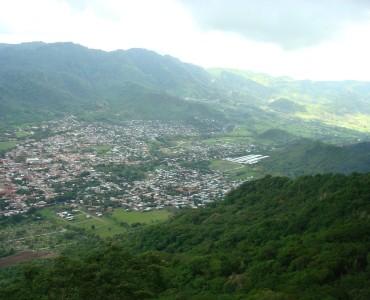
Lying at the crossroads of the North and South American continents and the Atlantic and Pacific oceans, Panama is of immense strategic importance. This has made it a target for intervention by the US, which in 1989 invaded Panama to depose a former ally, Manuel Noriega, and until 1999 controlled the Panama Canal. Panama has the largest rainforest in the Western Hemisphere outside the Amazon Basin and its jungle is home to an abundance of tropical plants, animals and birds – some of them to be found nowhere else in the world.
However, it is for a feat of engineering, a canal connecting the Atlantic and Pacific oceans, that Panama is famous. Every year hundreds of thousands of people make the eight-hour journey through the waterway and it generates a proportion of the country”s GDP. The Panama canal is a conduit for global cargo Panama plans to widen the canal, which is more than 90 years old and operating almost at full capacity, to allow it to handle more and larger vessels. Work on the scheme, which was approved in a referendum in 2006, is due to go ahead in 2008. Bananas are the main cash crop, but the trade has been hit by disease and is vulnerable to tariff changes in the European export market. The canal, the natural attractions of its pristine forests and coastlines, and a lively, modern capital are fueling a growing tourism industry.